Can Period Blood Have HIV? Facts About Menstrual Blood and HIV Transmission
Categories: Health
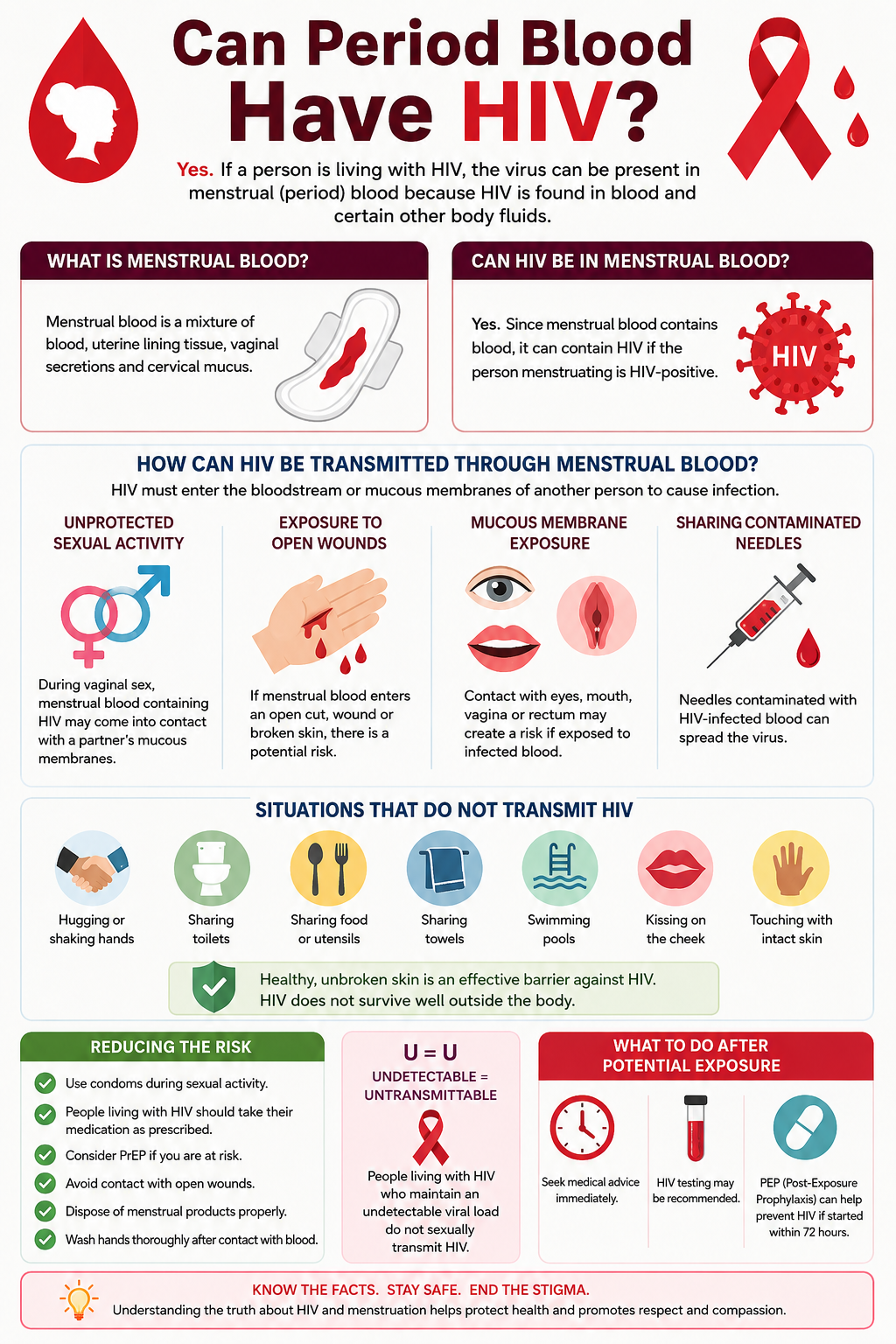
Can Period Blood Have HIV?
Many people ask, “Can period blood have HIV?” The answer is yes. If a person is living with HIV, the virus can be present in menstrual blood because HIV is found in blood and certain other body fluids. However, the presence of HIV in menstrual blood does not automatically mean that HIV transmission will occur.
There are many misconceptions about HIV and menstruation. Some people fear that any contact with menstrual blood can spread HIV, while others are unsure whether menstrual blood poses any risk at all. Understanding the facts can help reduce fear, prevent misinformation, and encourage safe practices.
This article explains what HIV is, whether it can be found in period blood, how transmission can happen, situations that pose a risk, and effective prevention methods.
Understanding HIV
Human Immunodeficiency Virus (HIV) is a virus that attacks the immune system. Specifically, it targets CD4 cells, also known as T-helper cells, which help the body fight infections and diseases.
Without treatment, HIV can weaken the immune system over time, making it harder for the body to defend itself against illnesses. If left untreated for many years, HIV can progress to AIDS (Acquired Immunodeficiency Syndrome).
Fortunately, modern antiretroviral therapy (ART) allows people with HIV to live long, healthy lives while greatly reducing the risk of transmitting the virus to others.
What Is Menstrual Blood?
Menstrual blood, commonly called period blood, is not just blood. It is a mixture of:
- Blood
- Uterine lining tissue
- Vaginal secretions
- Cervical mucus
During menstruation, the uterus sheds its lining, and this material leaves the body through the vagina.
Because menstrual blood contains actual blood, it can contain HIV if the person menstruating is HIV-positive.
Can Period Blood Contain HIV?
Yes.
If a person has HIV, the virus may be present in their menstrual blood. Since HIV is found in blood, any blood released during menstruation may contain the virus.
This is why menstrual blood is considered a potentially infectious bodily fluid.
However, HIV transmission requires specific conditions. Simply seeing menstrual blood or being near someone who is menstruating does not expose a person to HIV.
How HIV Is Transmitted
HIV can only be transmitted through certain body fluids from a person who has HIV.
These fluids include:
- Blood
- Semen
- Pre-ejaculate fluid
- Vaginal fluids
- Rectal fluids
- Breast milk
For HIV transmission to occur, these fluids generally must enter another person's bloodstream or come into contact with mucous membranes.
Common transmission routes include:
Unprotected Sexual Contact
Sexual intercourse without protection remains one of the most common methods of HIV transmission worldwide.
Sharing Needles
Using contaminated needles or syringes can transfer HIV-infected blood directly into another person's bloodstream.
Mother-to-Child Transmission
An HIV-positive mother may transmit HIV during pregnancy, childbirth, or breastfeeding if preventive measures are not taken.
Occupational Exposure
Healthcare workers may experience accidental exposure through needle-stick injuries or contact with infected blood.
Can HIV Be Transmitted Through Menstrual Blood?
Yes, but only under specific circumstances.
Menstrual blood containing HIV must enter another person's bloodstream or mucous membranes for transmission to occur.
During Sexual Activity
Unprotected vaginal sex during menstruation may increase the likelihood of exposure to menstrual blood.
If one partner has HIV and is not virally suppressed, HIV transmission may occur.
Through Open Cuts or Wounds
If menstrual blood enters an open wound, cut, or broken skin, there is a possibility of transmission.
Through Mucous Membranes
Contact between infected menstrual blood and the eyes, mouth, vagina, or rectum may create a risk of HIV transmission.
Sharing Contaminated Needles
Needles contaminated with HIV-positive blood can spread the virus regardless of whether the blood comes from menstruation.
Can You Get HIV from Touching Menstrual Blood?
Generally, no.
Healthy, intact skin acts as a natural barrier against HIV.
Touching menstrual blood with unbroken skin is not considered a route of HIV transmission.
After accidental contact, simply wash the area thoroughly with soap and water.
Can Dried Menstrual Blood Spread HIV?
The risk is extremely low.
HIV does not survive well outside the human body. Once exposed to air and environmental conditions, the virus rapidly loses its ability to infect.
Dried blood on surfaces does not typically pose a significant HIV transmission risk.
Routine cleaning and disinfection are usually sufficient.
Can You Get HIV from Menstrual Products?
Used menstrual products such as pads, tampons, or menstrual cups may contain blood.
However, casual contact with these items does not normally result in HIV transmission.
Transmission would require infected blood from these products to enter another person's bloodstream or mucous membranes.
Proper disposal and hygiene practices are recommended.
HIV Risk During Sex While on a Period
Some people wonder whether sex during menstruation carries a higher HIV risk.
Menstrual blood can increase the amount of blood exposure during sexual activity. If an HIV-positive person has a detectable viral load, the possibility of transmission may increase compared to situations where blood exposure is absent.
Using condoms and maintaining HIV treatment significantly reduce risk.
What Does Undetectable Mean?
Modern HIV treatment can suppress the virus to extremely low levels.
When the viral load becomes so low that laboratory tests cannot detect it, the person is considered "undetectable."
Scientific studies have demonstrated:
U = U
Undetectable = Untransmittable
People who consistently maintain an undetectable viral load through treatment do not sexually transmit HIV.
This applies regardless of menstruation.
HIV Prevention Strategies
Use Condoms
Condoms remain one of the most effective methods of preventing HIV transmission during sexual activity.
Take HIV Medication
People living with HIV should adhere to prescribed antiretroviral therapy.
Consider PrEP
Pre-Exposure Prophylaxis (PrEP) is a preventive medication for people who may be at risk of HIV exposure.
Seek PEP After Exposure
Post-Exposure Prophylaxis (PEP) can help prevent infection if started within 72 hours of a potential HIV exposure.
Follow Proper Hygiene
Wash hands thoroughly after handling blood and use protective gloves when necessary.
Common Myths About Period Blood and HIV
Myth: Menstrual Blood Always Spreads HIV
Fact: HIV transmission requires specific exposure routes.
Myth: HIV Can Spread Through Toilet Seats
Fact: HIV cannot survive or spread through toilet seats.
Myth: Touching Menstrual Blood Causes HIV
Fact: Intact skin prevents HIV infection.
Myth: Every HIV-Positive Person Can Transmit HIV
Fact: People with an undetectable viral load do not sexually transmit HIV.
Myth: HIV Lives for Days on Surfaces
Fact: HIV quickly becomes inactive outside the human body.
When Should You Get Tested?
Consider HIV testing if:
- You had unprotected sex.
- You shared needles.
- You experienced blood exposure through an open wound.
- You believe you may have been exposed to HIV.
Early testing provides peace of mind and allows prompt treatment if needed.
Frequently Asked Questions (FAQ)
Can period blood contain HIV?
Yes. If a person is HIV-positive, menstrual blood may contain HIV because it contains blood.
Can touching period blood give you HIV?
No. Touching menstrual blood with intact skin does not transmit HIV.
Can HIV survive in dried menstrual blood?
The virus becomes inactive quickly outside the body, making transmission from dried blood extremely unlikely.
Is sex during a period riskier for HIV transmission?
Blood exposure may increase risk when one partner has a detectable viral load. Protection and treatment greatly reduce this risk.
Can HIV spread through tampons or sanitary pads?
Casual contact with used menstrual products does not usually result in HIV transmission.
What should I do after possible exposure?
Seek medical advice immediately. PEP may help prevent HIV infection if started within 72 hours.
Conclusion
Yes, period blood can contain HIV when the person menstruating is living with the virus. However, HIV transmission is not automatic and requires specific exposure routes, such as unprotected sexual contact, exposure through open wounds, or contaminated needles.
Everyday contact, touching menstrual blood with healthy skin, sharing bathrooms, or being around someone during their period does not spread HIV. Advances in HIV treatment have also made it possible for many people to achieve an undetectable viral load, eliminating the risk of sexual transmission.
Understanding the facts about menstrual blood and HIV helps promote awareness, reduce stigma, and support informed health decisions.